Platform
Agentforce for Setup
Kishore V, Anindya Kundu, Shreyas Deshmukh, Prashanth Lakshman
Agentforce for Setup
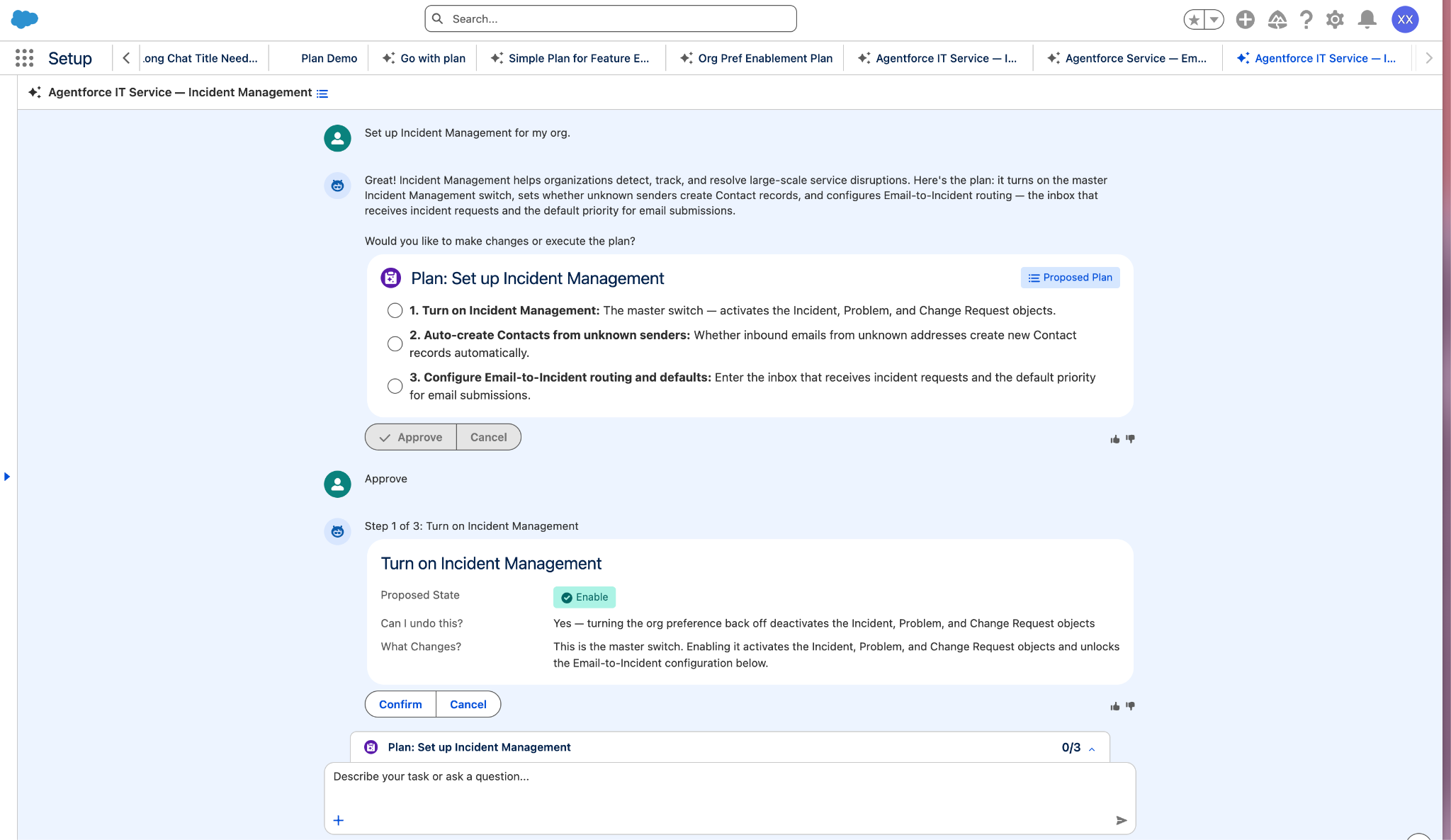
: Feature Enablement
This replaces manual, checklist-driven setups with a conversational experience. Admins describe business needs, and the Setup Agent identifies features, generates a reviewable plan, and executes tasks—including GO automations and permission sets—with real-time progress tracking, launching with Revenue Cloud at Dreamforce.
Agentforce for Setup
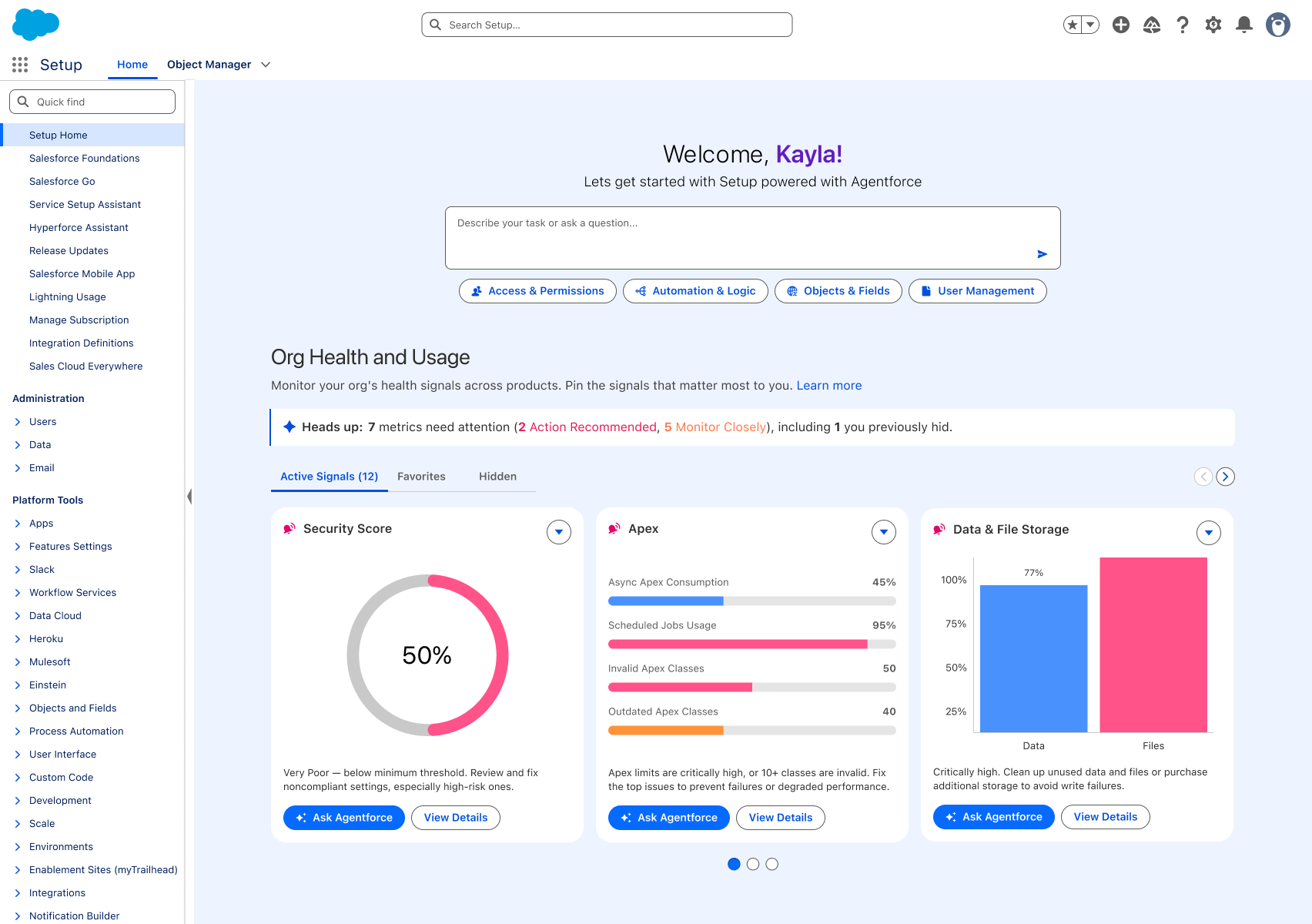
: Org Health Cards
Agentforce for Setup integrates with the Org Health & Usage platform, introducing a four-tier severity system (Action Recommended, Monitor Closely, Consider, On Track) on Setup Home. Its redesigned Highlights section replaces static scores with actionable, high-urgency bullets, enabling administrators to resolve critical configuration and security risks efficiently.
Agentforce for Setup
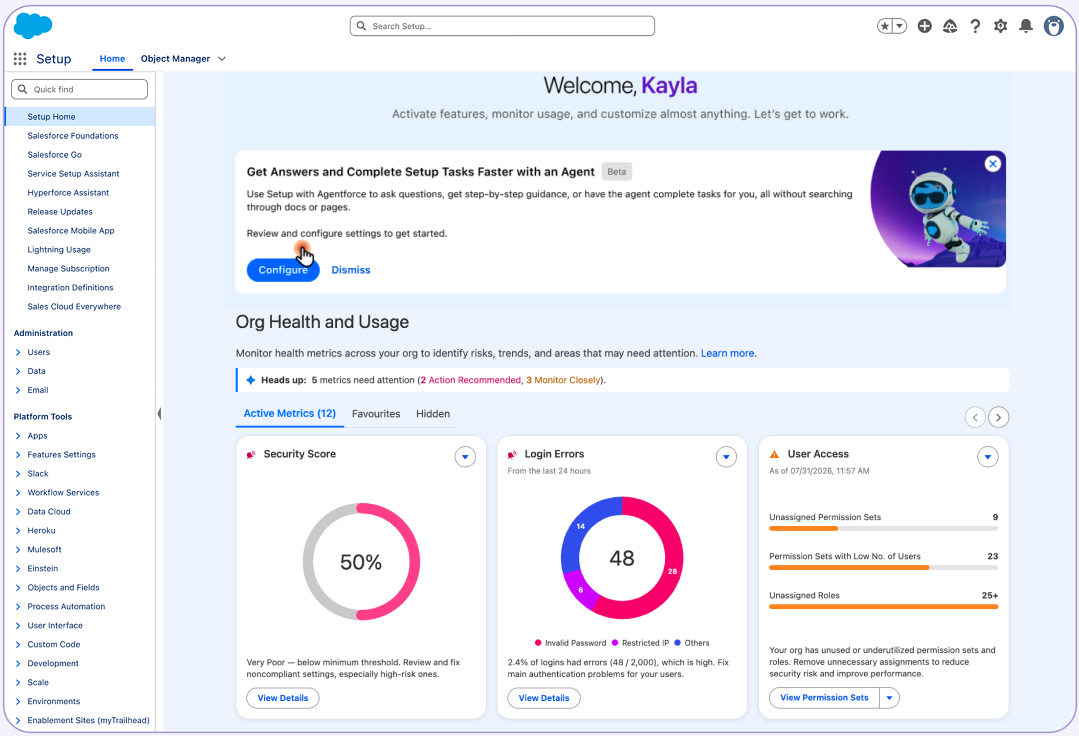
: Org Health Non-Agentic Home
To bring Org Health observability to admins not using Agentforce, this framework extends to the standard Non-Agentic Setup Home. It dynamically updates Highlight counters and the "View Details" becomes a multi-destination menu for direct navigation to metrics such as Apex and User Access Health.
Agentforce for Setup
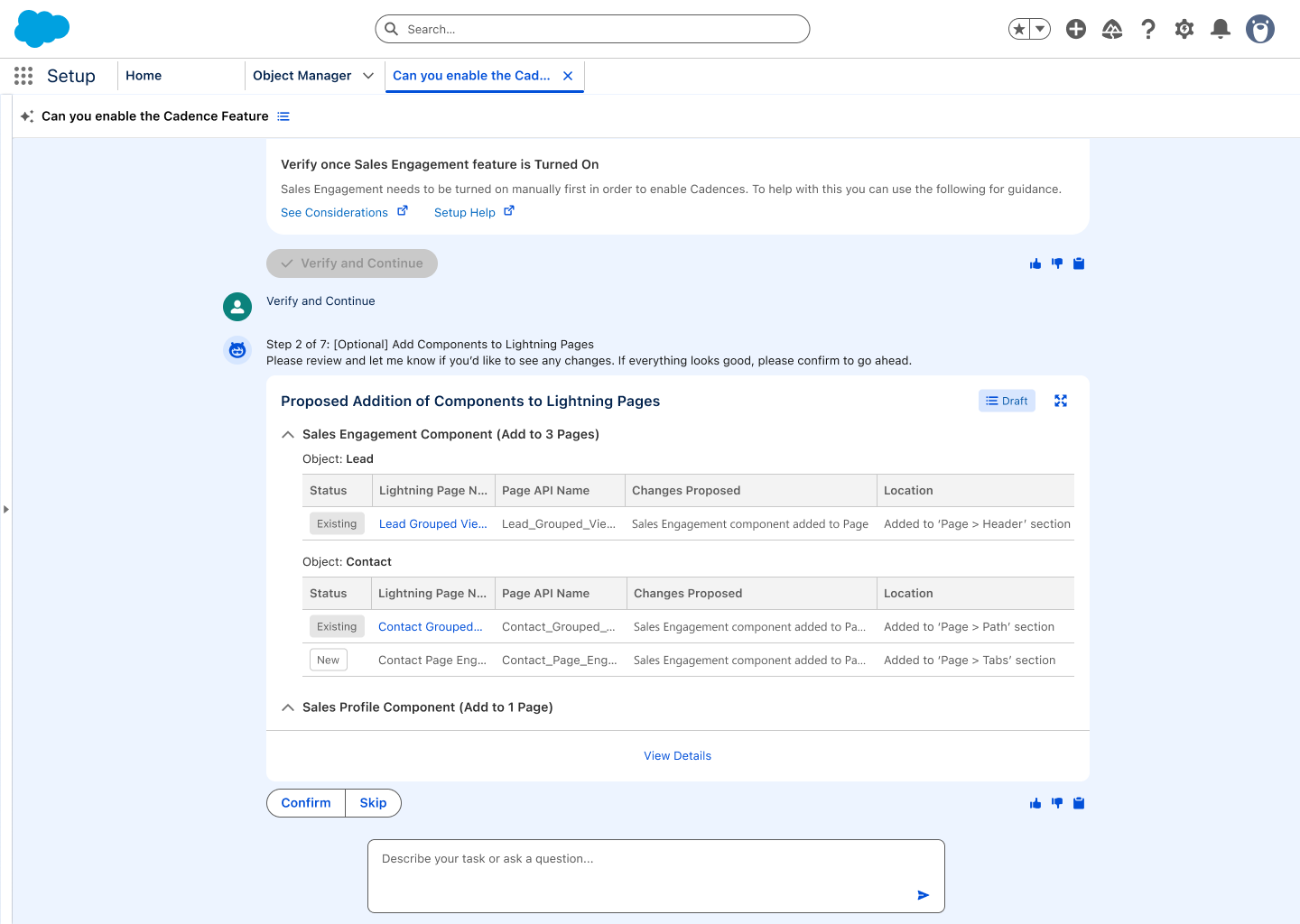
: Edit Lightning Pages
Agentforce for Setup: Edit Flexipage automates Lightning Record Page configuration, shifting from manual tasks to autonomous AI execution. An UI Configuration Orchestrator simplifies metadata management by processing fields, actions, and components on an object-first basis, while built-in skip logic prevents duplicates.
Agentforce for Setup
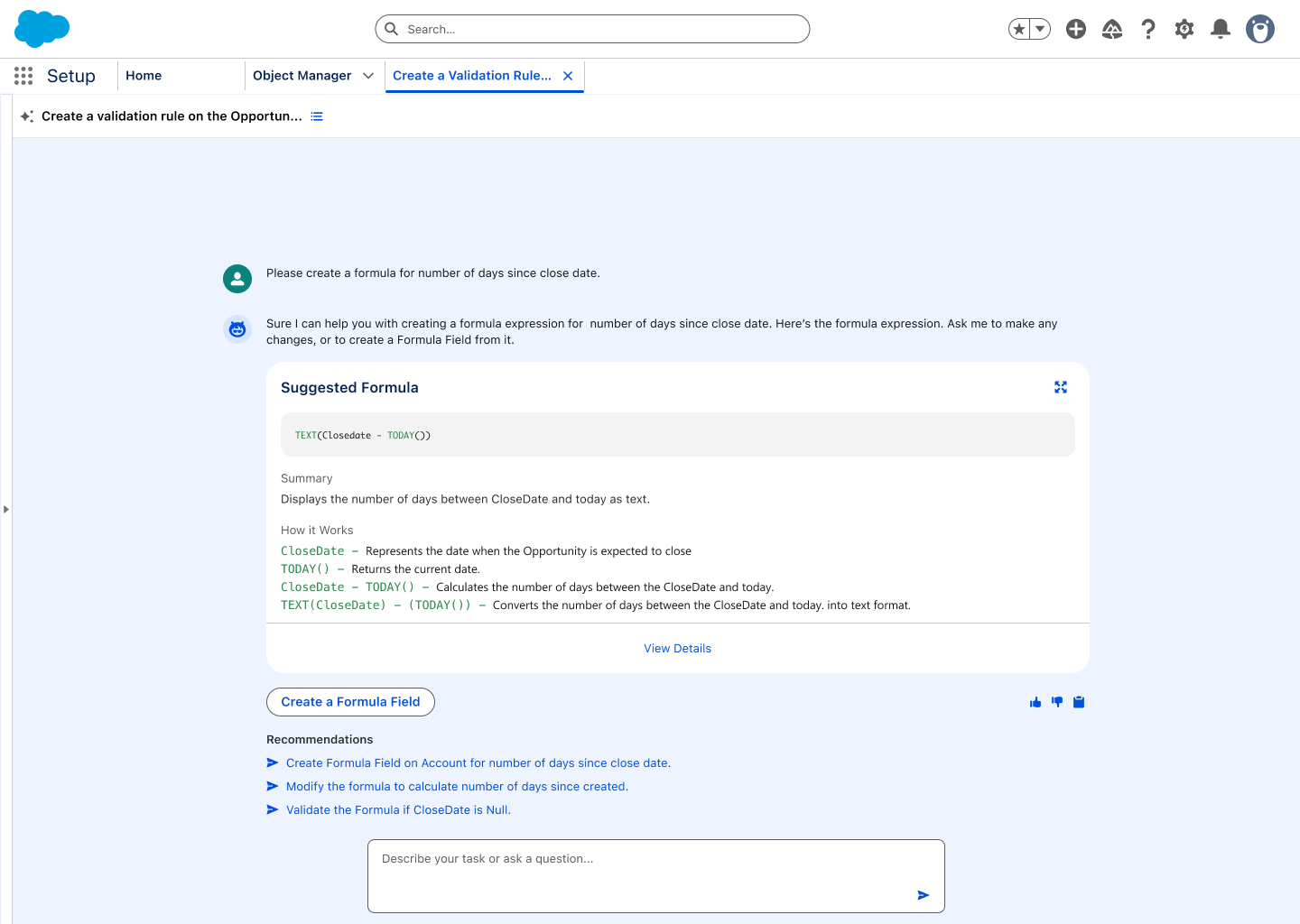
: Formulas
Agentforce for Setup: Formulas enables administrators to create and update formula fields and validation rules through AI-generated expressions in a conversational interface. This eliminates manual copy-pasting into the Object Manager, reducing workflow friction and deployment errors while creating a secure metadata authoring environment.
Agentforce for Setup
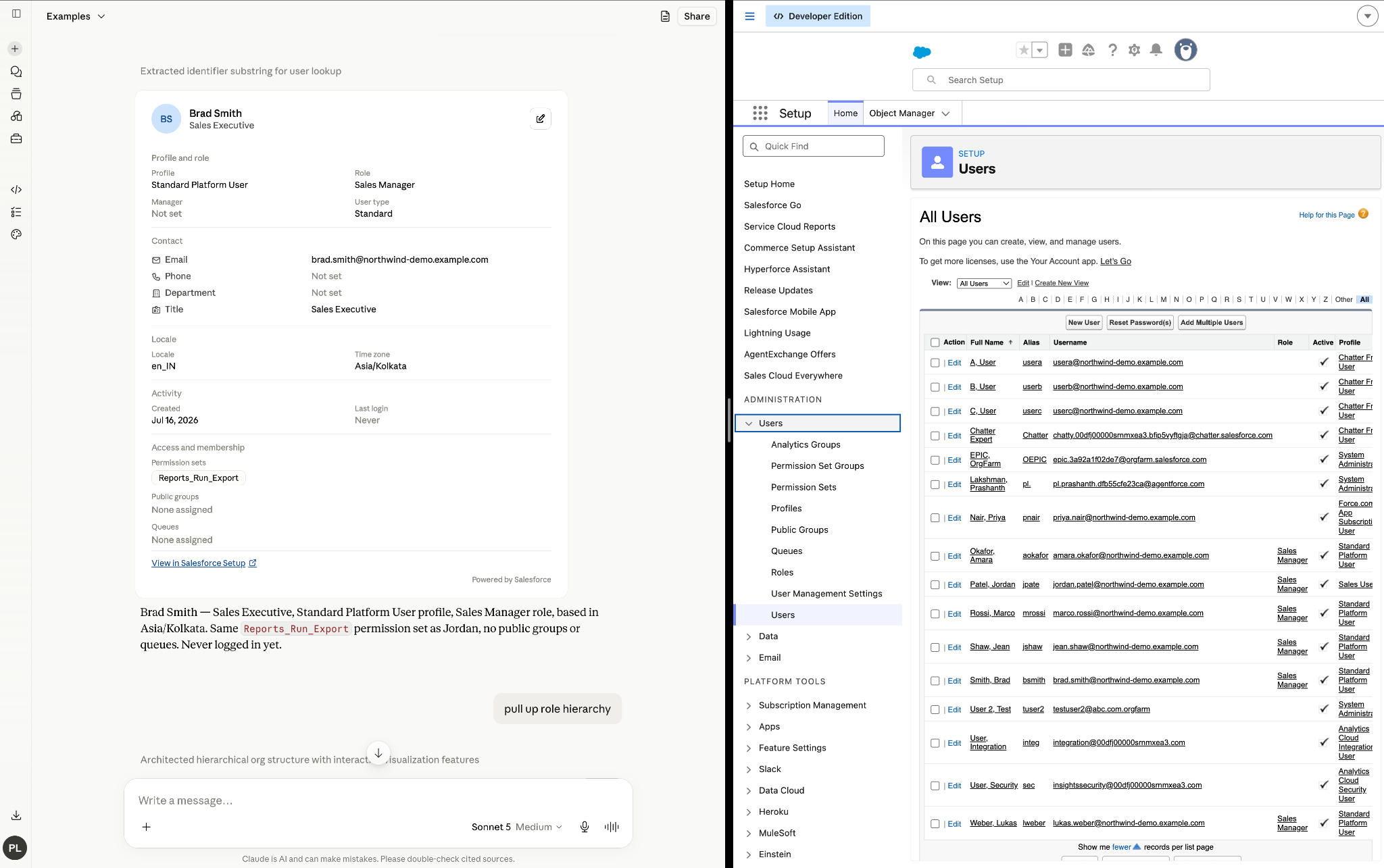
: Claude Cowork
This design study analyzes integrating Salesforce with conversational agents like Claude, establishing best practices for interactive responses—such as dynamic components and error recovery—while highlighting gaps in transparency, user control, and workflow transitions.